
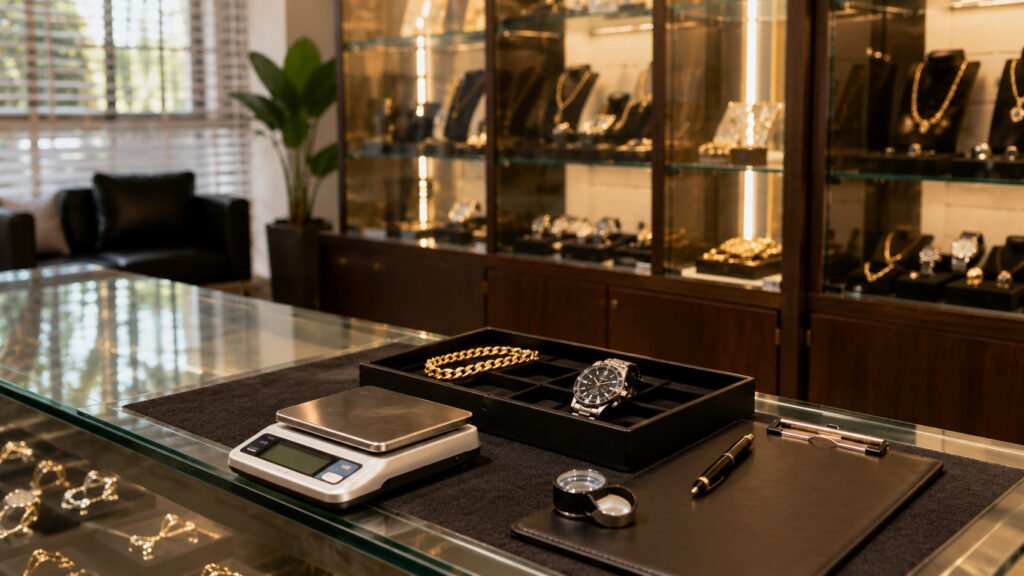
When you need short-term cash, pawning a valuable item can provide an alternative to permanently selling it. But before visiting a pawnshop, you may be wondering: pawn shop—how does it work, and what happens to your item after you receive the money?
In Malaysia, this is known as pajak gadai, and it’s a fully licensed, regulated way to get quick cash without touching your credit score. A licensed pawnshop provides a short-term loan using an accepted valuable item as collateral. You bring your item for evaluation, receive a loan offer and leave the item with the pawnshop if you accept the terms. You can then reclaim it by repaying the principal, applicable interest and charges within the agreed period.
This guide explains how a pawn shop works in Malaysia, including the valuation process, interest calculation, pawn ticket, repayment options and what happens if you do not redeem your item.
How Does a Pawn Shop Work? A Quick Answer
A pawnshop works by offering to lend against an item of value, with the cash amount based on what that item is worth.
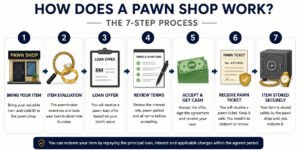
The basic pawn shop process is:
- Bring your valuable item and valid identification.
- Allow the pawnbroker to examine and value the item.
- Receive a pawn loan offer.
- Review the interest rate and redemption period.
- Accept the offer and receive your money.
- Keep the pawn ticket issued for the transaction.
- Repay the loan and applicable interest to redeem your item.
Your item remains with the pawnshop as collateral until you redeem it. If you cannot redeem it before the due date, you may be able to renew or extend the pawn period by paying the required interest, subject to the applicable terms.
What Is a Pawn Shop?
A pawn shop, also known as a kedai pajak gadai, provides short-term loans secured against valuable personal property.
Unlike an unsecured personal loan, the pawnshop does not provide money based mainly on your income or credit history. Instead, the loan is supported by the value of the item you leave with the pawnbroker.
You continue to have the right to redeem the item during the agreed pawn period. Once the principal, interest and applicable charges are paid, the item is returned to you.
Licensed pawnshops in Malaysia are regulated under the Pawnbrokers Act 1972 and related regulations. KPKT also publishes information on the rights of pawners and the differences between licensed and unlicensed operators.
How a Pawn Shop Works in Malaysia: Step by Step
Step 1: Bring Your Item to the Pawnshop
Start by bringing the item you want to pawn to a licensed pawnshop.
Different pawnshops accept different types of valuables. AIENB currently specialises in:
- Gold jewellery
- Gold bars and coins
- Gold of different purity levels
- Rolex watches
- Patek Philippe watches
- Richard Mille watches
- Audemars Piguet watches
- Selected branded luxury watches
You should also bring valid identification. Depending on the pawnbroker’s requirements, acceptable identification may include your MyKad, passport, driving licence, work permit or another recognised identification document.
AIENB states that customers should bring their identification and item, along with the warranty card when applicable. Pawners must also be at least 18 years old.
Step 2: The Pawnbroker Examines Your Item
The next step is an assessment by a trained valuer.
For gold, the valuation may consider:
- Gold purity
- Item weight
- Current gold market price
- Whether the item contains stones or non-gold components
- Overall condition
- Resale or recovery value
The pawnbroker may test the gold to confirm whether it is genuine and identify its purity. Depending on the item, this may involve visual inspection, weighing, electronic testing or another professional testing method. Many shops prefer items with quicker resale turnover, and loans often range from about 25% to 60% of resale value.
For a luxury watch, the pawnbroker may consider:
- Brand and model
- Authenticity
- Age
- Physical condition
- Current market demand
- Movement and working condition
- Original box and documentation
- Warranty card or purchase records
- Availability of replacement parts
Bringing the original box, warranty card, certificate or receipt may help the valuer verify the item. However, whether these documents are required will depend on the item and the pawnshop’s internal process.
Step 3: You Receive a Pawn Loan Offer
After examining the item, the pawnbroker will offer a loan amount based on its assessed value.
The pawn amount will not necessarily equal the item’s original purchase price or full retail value. This is because the pawnbroker must consider the item’s current market value, condition, price fluctuations and potential resale value if the loan is not repaid.
For example, a piece of jewellery purchased several years ago may be valued mainly according to its current gold purity and weight rather than its original retail price. Labour charges, branding and design premiums paid at the jewellery shop may not be fully reflected in the pawn amount.
Similarly, the value of a luxury watch can depend heavily on authenticity, model, condition and current demand.
You are not required to accept the first offer. Ask the pawnbroker to explain how the valuation was determined before making your decision.
Step 4: Review the Interest Rate and Terms
Before accepting the pawn loan, review all the terms carefully.
Check the following information:
- Principal loan amount
- Monthly interest rate
- Pawn period
- Redemption deadline
- Charges for issuing the pawn ticket
- Renewal or extension conditions
- Total amount required for redemption
- Description of the pawned item
According to KPKT, the interest charged by a licensed pawnshop must not exceed 2% per month or part of a month. KPKT also states that a handling charge of RM0.50 applies to a loan exceeding RM10.
The rate offered by a pawnshop may be lower than the permitted maximum, so confirm the actual rate stated on your pawn ticket.
Step 5: Accept the Offer and Receive Your Money
Once you agree to the valuation and loan terms, the pawnshop will record the transaction and issue the loan amount.
Because the item itself supports the loan, the application process is generally more straightforward than applying for a conventional bank loan. However, the pawnbroker still needs to verify your identity, record the item and complete the required transaction documentation.
The exact processing time may depend on:
- The type of item
- The time needed to verify authenticity
- The item’s value
- The documents provided
- The branch’s verification procedures
AIENB describes its process as bringing in the item, completing an expert check, receiving a valuation and obtaining cash after accepting the offer.
Step 6: Receive and Keep Your Pawn Ticket
Your pawn ticket is one of the most important documents in the transaction.
It should contain information such as:
- Customer details
- Description of the pawned item
- Pawn amount
- Interest rate
- Transaction date
- Redemption deadline
- Applicable terms
Check that the item description, weight and other relevant information are correct before leaving the pawnshop.
Keep the pawn ticket in a secure place because it will normally be needed when redeeming or renewing the pawn. KPKT states that pawners are entitled to a copy of the pawn ticket, and a copy of the relevant record can be provided if the original is lost.
Step 7: Your Item Is Stored Securely
After the transaction is completed, the pawnshop keeps the item until you redeem it.
Licensed pawnshops are required to manage pawned items according to applicable regulations. KPKT explains that licensed operators store pawned items at licensed premises with security protection and insurance, unlike unlicensed businesses that may not provide the same safeguards.
AIENB states that pawned valuables are kept in secured strongrooms until customers return to redeem them.
How Much Money Can You Get From a Pawn Shop?
There is no single fixed amount that every customer will receive. Your loan offer depends on the item and its current assessed value.
For gold, the amount may depend mainly on:
- Gold purity
- Net gold weight
- Current gold price
- Condition
- Testing results
For a luxury watch, the amount may depend on:
- Brand
- Model and reference number
- Authenticity
- Condition
- Market demand
- Original accessories and documents
- Current resale value
Two items that originally had the same purchase price may receive different pawn offers because of their condition, material value and market demand.
To understand your offer, ask the valuer:
- What purity or specification was identified?
- What weight was used in the calculation?
- What market factors affected the valuation?
- Does the condition reduce the pawn value?
- Would supporting documents improve the assessment?
A professional pawnbroker should be able to explain the offer before you decide whether to proceed.
How Long Do You Have to Redeem a Pawned Item?
KPKT states that pawned collateral should be redeemed within six months from the pawn date or within a longer period agreed between the pawner and pawnbroker.
You generally do not need to wait until the end of the full period. You may redeem the item earlier by paying:
- The original principal
- Interest accumulated according to the terms
- Applicable charges
Redeeming earlier may reduce the total interest you pay, depending on how the interest period is calculated.
Before completing the pawn transaction, confirm:
- The exact redemption deadline
- How a partial month is charged
- The amount required if you redeem early
- Whether advance notice is necessary
- Which identification and documents you need to bring
Is It Better to Pawn or Sell Your Item?
It depends on what you need. Pawning is the better choice if you want quick cash but plan to get your item back — you retain ownership and can redeem it once you repay the loan. Selling makes more sense if you no longer want the item and prefer a one-time, final transaction, usually at a higher payout than a pawn loan since there’s no repayment expected.
| Pawn | Sell | |
| Ownership | Retained (redeemable) | Permanently given up |
| Cash received | Percentage of item value | Full item value (typically higher) |
| Repayment needed | Yes, plus interest | No |
| Best for | Short-term cash need | Items you no longer want |
What Should You Bring to a Pawn Shop?
Prepare the following before visiting:
- Valid identification
- The item you want to pawn
- Original warranty card, if available
- Certificate of authenticity, if available
- Purchase receipt, if available
- Original watch box or packaging
- Relevant service records
- Any documentation that helps verify ownership or authenticity
Clean the item gently before bringing it in, but do not use harsh chemicals or attempt repairs that may cause damage.
For a luxury watch, avoid polishing it aggressively because excessive polishing may affect its condition and collector value.
Why Pawn Your Gold or Luxury Watch With AIENB?
AIENB is a licensed pawnbroker in Malaysia specialising in gold and luxury watches.
The AIENB pawning process includes:
- Professional item assessment
- Clear loan valuation
- Explanation of the offered terms
- Cash after the offer is accepted
- Secure storage until redemption
- Pawn ticket renewal options
- Accessible branches in Klang, Kota Damansara, Sentul and Subang Jaya
AIENB also provides a drive-through pawning service at its Sentul location, allowing eligible customers to complete the pawning process without leaving their vehicle. Branch services, operating hours and accepted items may vary, so check the relevant location before visiting.
Frequently Asked Questions
1. How does a pawn shop work in Malaysia?
You bring an accepted valuable item to a licensed pawnshop for evaluation. The pawnbroker offers you a loan based on the assessed value. If you accept, the item is stored as collateral and you receive the money together with a pawn ticket. You can reclaim the item by repaying the principal, interest and applicable charges.
2. Do pawn shops buy your item immediately?
Not necessarily. Pawning means using the item as collateral for a loan, while selling means transferring ownership permanently. Confirm whether the transaction is a pawn loan or an outright sale before agreeing.
3. What items can I pawn at AIENB?
AIENB currently accepts different types and purities of gold as well as selected branded luxury watches. Contact the relevant branch before visiting if you are unsure whether your item is accepted.
4. Do I need identification to pawn an item?
Yes. You will need valid identification so the pawnshop can record and verify the transaction. Pawners must be at least 18 years old.
5. How do pawn shops determine an item’s value?
The valuation depends on the type of item. Gold is commonly assessed according to purity, weight and current market value. Luxury watches may be assessed according to authenticity, model, condition, documentation and market demand.
6. What is the maximum pawn shop interest in Malaysia?
KPKT states that the interest charged by a licensed pawnbroker must not exceed 2% per month or part of a month. Always check the actual rate printed on your pawn ticket.
7. Can I redeem my item before six months?
Yes. You may generally redeem the item during the pawn period by paying the principal, accumulated interest and applicable charges. Ask the pawnshop for the exact early-redemption amount.
8. Can I renew my pawn if I cannot repay the principal?
A renewal or extension may be available upon payment of the interest due. Contact the pawnshop before the redemption deadline to understand the renewal process and receive updated documentation.
9. What happens if I lose my pawn ticket?
Contact the pawnshop immediately and bring valid identification. KPKT states that a pawner is entitled to a copy of the relevant pawnshop record if the original pawn ticket is lost.
10. What happens if I never repay the pawn loan?
The item may eventually be disposed of according to the applicable legal process. For loans exceeding RM200, KPKT states that unredeemed collateral is disposed of through auction, and the pawner may claim any eligible surplus remaining after applicable deductions.