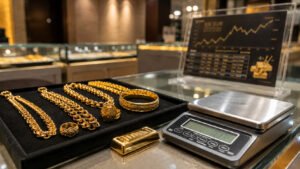
Gold is one of the most common valuable items brought to pawn shops because it is widely accepted, easy to evaluate, and often holds strong resale value. However, before a pawn shop can offer a loan amount, the gold must be tested properly.
So, how do pawn shops test gold?
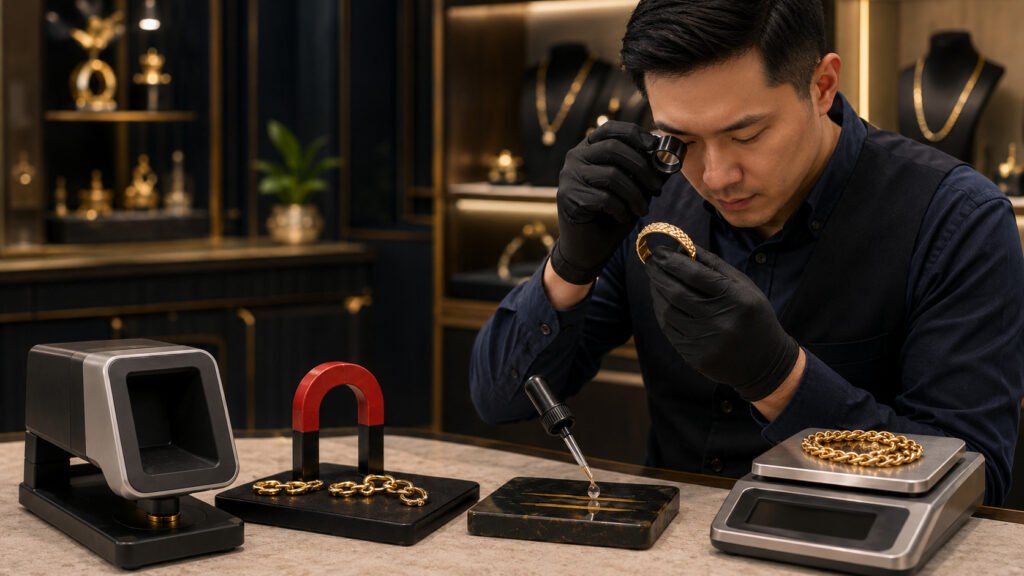
Pawn shops usually test gold by checking the hallmark, inspecting the item’s appearance, using simple screening tests, confirming purity with testing tools, weighing the gold, and calculating its value based on the current gold price. The goal is to confirm whether the item is real gold, what purity it is, and how much it is worth for pawning.
For customers in Malaysia, this process is especially important when pawning common gold types such as 999 gold, 916 gold, 835 gold, 750 gold, 585 gold, or other gold jewellery items.
Why Pawn Shops Test Gold Before Giving a Loan
Pawn shops test gold before offering a loan because not every gold-coloured item is real gold. Some jewellery may be gold plated, gold filled, mixed with other metals, or marked with a fake purity stamp.
Testing helps the pawn shop confirm three important things:
- Whether the item is genuine gold
- The gold purity or karat level
- The estimated pawn value based on weight and market price
This protects both the pawnbroker and the customer. For the pawn shop, it ensures that the item has real value. For the customer, it gives a clearer explanation of how the loan amount is calculated.
A professional gold pawn shop will not simply guess the value of your jewellery. The item needs to go through a proper gold purity test before a fair pawn offer can be made.
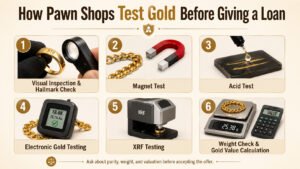
Step 1: Visual Inspection and Hallmark Check
The first step is usually a visual inspection. The pawnbroker will look at the item’s condition, colour, weight, surface quality, and any visible stamps or markings.
Common gold markings include:
| Marking | Common Meaning |
| 999 | 24K gold |
| 916 | 22K gold |
| 835 | Around 20K gold |
| 750 | 18K gold |
| 585 | 14K gold |
| 375 | 9K gold |
In Malaysia, 916 gold is one of the most common types of gold jewellery. Customers may also bring in 999 gold bars, 999 gold coins, 750 gold jewellery, or older jewellery with different purity levels.
However, a hallmark alone is not enough to prove that the gold is real. Some fake gold items may also have stamped markings. That is why pawn shops usually continue with other tests and combine multiple methods to determine authenticity and purity before confirming the final value.
Step 2: Magnet Test for Obvious Fake Gold
A magnet test is one of the simplest ways to screen gold. Pure gold is not magnetic, so if an item reacts strongly to a magnet, it may contain other metals or may not be genuine gold.
However, this test is only a basic check. Passing the magnet test does not automatically mean the item is real gold. Some fake gold items are also made with non-magnetic metals, so the pawn shop still needs to perform more accurate testing.
The magnet test is useful for detecting obvious fake items, but it should not be treated as the final result.
Step 3: Acid Test for Gold Purity
The gold acid test is one of the most common methods used to check gold purity. In this method, the pawnbroker may rub a small part of the item on a testing stone; trained staff may also make a small scratch in an inconspicuous area or use a traditional scratch test on a ceramic plate before applying a drop of nitric acid, and some professionals use acid testing kits to observe the reaction.
Different acid strengths are used to test different karat levels, such as 10K, 14K, 18K, 22K, or 24K gold. If the gold mark remains stable after the acid is applied, it may indicate that the item matches that purity level. If the mark fades or reacts strongly, the item may have lower purity or may not be real gold.
The acid test is useful, but it should be handled by trained staff. If done carelessly, it may leave a small mark or damage the item’s surface. This is why customers should always visit a professional pawn shop instead of trying to test valuable jewellery on their own.
Step 4: Electronic Gold Testing
Some pawn shops use electronic gold testers to check gold purity. These devices estimate the karat level by measuring electrical conductivity to estimate purity.
Electronic gold testing can be faster and cleaner than acid testing. It is useful for checking gold jewelry and giving a quick estimate of purity. However, the result may still depend on the item’s surface condition, plating, thickness, and metal composition.
For higher-value gold items, the pawn shop may combine electronic testing with other methods to improve accuracy.
Step 5: XRF Gold Testing for More Accurate Results
XRF testing is one of the more advanced ways to test gold. XRF stands for X-ray fluorescence, and this method uses specialized equipment to determine the metal composition of the item with high precision.
During XRF analysis, x-ray beams are directed at the item to analyse its metal content without cutting or melting it. XRF analyzers can detect the percentage of gold, silver, platinum, and other precious metals inside the item. This makes it useful for identifying gold purity, mixed metals, gold-plated items, and unusual metal combinations.
One major advantage of XRF gold testing is that it is non-destructive. The jewellery does not need to be scratched deeply, melted, or damaged during the test. This is especially helpful for customers who want to pawn valuable jewellery, gold bars, coins, or branded gold items.
Not every pawn shop uses the same testing equipment, but modern pawn shops may pair XRF analyzers with other tests to authenticate gold jewelry and confirm the item’s authenticity and purity.
Step 6: Weight Check and Gold Value Calculation
After the pawn shop confirms the gold purity, the next step is weighing the item on precision scales before calculating its value. Gold value is usually calculated based on three main factors:
- Gold purity
- Gold weight
- Current market gold price
For example, 999 gold has a higher purity than 916 gold, while 916 gold has a higher purity than 750 or 585 gold. This means two gold items with the same weight may receive different pawn values if their purity levels are different.
The pawnbroker will also consider the condition of the item, whether it is jewellery, a coin, a bar, or another gold item. For pawn loans, the value offered for a gold piece is usually based on the gold content and the pawn shop’s valuation policy.
This is why customers should always ask the pawn shop to explain the purity, weight, and valuation before accepting the pawn offer.
Can Pawn Shops Detect Gold Plated or Fake Gold?
Yes, pawn shops can usually detect gold plated or fake gold through proper testing.
Gold plated jewellery only has a thin layer of gold on the surface, while the inside is usually made from another metal. This type of item may look like real gold at first glance, but its actual gold content is very low, and worn gold plating can expose the base metal underneath.
Gold filled items contain more gold than gold plated items, but they are still not the same as solid gold. Solid gold jewellery has gold content throughout the item based on its purity level, such as 916, 750, or 585.
This is why visual inspection alone is not enough. A proper pawn shop gold test helps identify whether the item is solid gold, plated gold, or fake gold.
Will Gold Testing Damage My Jewellery?
Most gold testing methods are safe when handled by trained staff. Visual inspection, hallmark checking, magnet testing, weighing, electronic testing, and XRF testing are generally non-destructive.
Acid testing may involve rubbing the item on a testing stone or testing a small area. Depending on the method used, it may leave a minor mark, especially if the jewellery is delicate or has a polished surface.
If you are concerned about damage, you can ask the pawn shop what testing method they will use before the test begins. A professional pawnbroker should be able to explain the process clearly.
How Pawn Shops Value Gold in Malaysia
In Malaysia, pawn shops usually value gold based on purity and weight. Some shops may also use a density test to measure weight and volume when they need to verify gold more closely. Pure gold has a density of about 19.3 grams per cubic centimeter, which is much higher than most base metals. Common gold types include 999, 916, 835, 750, 585, and 375 gold.
For example:
- 999 gold usually has the highest value because it is close to pure gold.
- 916 gold is commonly used in Malaysian jewellery and is also widely accepted.
- 750 gold contains 75% gold and is commonly known as 18K gold.
- 585 gold contains 58.5% gold and is commonly known as 14K gold.
- 375 gold contains 37.5% gold and is commonly known as 9K gold.
The higher the gold content, the higher the possible valuation, assuming the item weight is the same. However, the final pawn amount can also depend on the current gold price, shop policy, item condition, and loan terms.
What Should You Check Before Pawning Gold?
Before visiting a pawn shop, it is helpful to prepare a few things so you understand the process better.
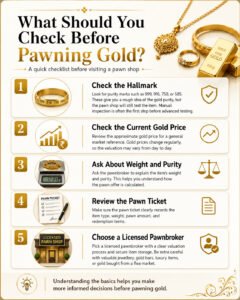
First, check whether your item has a visible hallmark such as 999, 916, 750, or 585. This gives you a rough idea of the possible purity, although the pawn shop will still need to test it, and a manual inspection is often the first line of checking before advanced tools are used.
Second, check the approximate current gold price so you have a general market reference. Gold prices can change, so the valuation may differ from one day to another.
Third, ask the pawn shop to explain the item’s weight and purity. This helps you understand how the pawn offer is calculated.
Fourth, make sure your pawn ticket records the important details clearly, including the item type, weight, pawn amount, and redemption terms.
Finally, choose a licensed pawnbroker with a clear valuation process and secure item storage. This is especially important when pawning valuable gold jewellery, gold bars, or luxury items, and if you are buying gold from a flea market, that can be a red flag and should be tested carefully before pawning or selling.
Pawn Your Gold at AIENB
If you are looking for a trusted gold pawn shop in Malaysia, AIENB provides pawnbroking services for customers who want to unlock cash from their gold and valuable items.
You can bring your gold jewellery, gold bars, gold coins, or other accepted valuable items for checking and valuation. The team will assess the item’s purity, weight, and condition before providing a pawn offer.
A clear gold testing process helps customers understand the real value of their items before making a decision. Whether you are pawning 999 gold, 916 gold, 750 gold, or other gold items, it is always better to choose a pawn shop that values transparency, fair assessment, and secure handling.
FAQs About How Pawn Shops Test Gold
1. How do pawn shops test gold?
Pawn shops test gold by checking the hallmark, inspecting the item, using basic screening tests, confirming purity with testing tools, weighing the gold, and calculating the value based on purity, weight, and current market gold price.
2. What is the most accurate way to test gold?
XRF gold testing is one of the more accurate non-destructive methods because it can analyse the metal composition of the item. However, pawn shops may also use other methods such as acid testing, electronic testing, and visual inspection. For the most accurate result, XRF testing is usually your best bet when available.
3. Can a pawn shop tell if gold is fake?
Yes. A professional pawn shop can usually identify fake gold, gold plated jewellery, or low-purity items through proper testing. The process may involve hallmark checks, magnet tests, acid tests, electronic testers, or XRF machines.
4. Do pawn shops use acid to test gold?
Some pawn shops use acid testing to check gold purity. This method involves applying acid solutions to a small test mark to observe the metal reaction. It should be done by trained staff to avoid unnecessary damage.
5. Is XRF gold testing better than acid testing?
XRF testing is often preferred for more detailed analysis because it is non-destructive and can detect metal composition. Acid testing is still useful, but it may require a small surface test.
6. Can fake gold have 916 or 999 stamps?
Yes. Some fake gold items may have misleading stamps such as 916 or 999. That is why pawn shops do not rely only on hallmarks. They usually perform additional tests to confirm whether the gold is genuine.
7. How do pawn shops calculate gold value?
Pawn shops calculate gold value based on the item’s purity, weight, and current gold price. The final pawn offer may also depend on item condition, shop policy, and loan terms.
8. Can I pawn gold without a receipt?
In many cases, you may still be able to pawn gold without a receipt, but the pawn shop will need to inspect and test the item first. You may also need to provide valid identification according to the pawn shop’s requirements.
9. Does AIENB accept 916 gold?
Yes, 916 gold is one of the common gold types accepted by pawn shops in Malaysia. You can bring your gold chain to AIENB for checking, valuation, and pawn offer based on the item’s purity and weight.
10. Where can I pawn gold in Malaysia?
You can pawn gold at a licensed pawn shop in Malaysia. If you are looking for a gold pawn shop, choose one that offers clear valuation, proper gold testing, secure storage, and transparent loan terms, and that can properly assess white gold or other jewelry types with the same transparency.